Build smarter in Northwest Indiana with modular homes.
Explore modular homes, ADUs, land/home packages, duplexes, and small investment builds with local guidance from PennyReady Ventures.
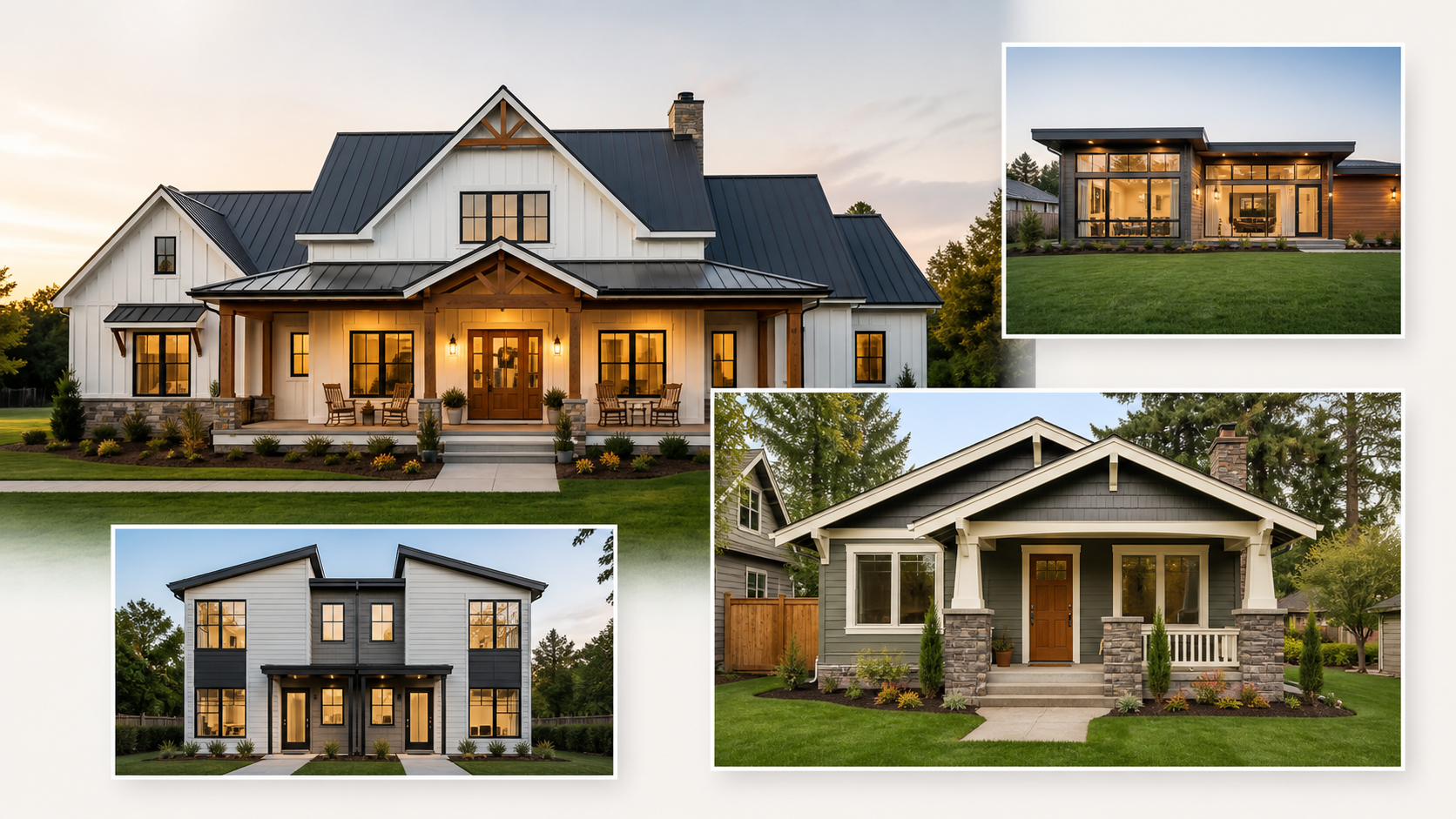
Modular is not just a house product. It is a land, planning, and execution strategy.
PennyReady Ventures helps connect the dots between land, site feasibility, modular design, budget conversations, and long-term real estate strategy.
- Start with the property, not just the floor plan.
- Look at access, utilities, zoning, budget, and timing before chasing the wrong build.
- Use modular as a smarter path for homes, ADUs, land/home packages, and small investment builds.
The PRV modular path
Review the property or goal
Clarify whether this is a home, ADU, land/home package, duplex, or investment build.
Check the practical constraints
Look at land, zoning, access, utilities, budget, timeline, financing, and exit strategy.
Match the right modular direction
Move toward the right Impresa resource, design path, land search, or build strategy.
Primary residences
Help buyers explore new construction without relying only on existing inventory.
Land + home packages
Pair buildable lots with modular home options to create inventory where buyers are stuck.
Accessory dwelling units
Evaluate whether a property may support an ADU for family use, rental income, or added flexibility.
Duplex / BTR strategy
Explore repeatable modular plans for small multifamily, infill, and build-to-rent opportunities.
Modular is not mobile. It is not manufactured housing.
The first job is clearing up the confusion. Modern modular homes are built in sections inside a factory, delivered to the site, placed on a permanent foundation, and finished as real property.
- Built to the same IRC building code used for traditional site-built homes.
- Placed on a permanent foundation as real property.
- Designed with modern layouts, finishes, and architectural styles.
- Can follow standard mortgage and appraisal paths when properly structured.
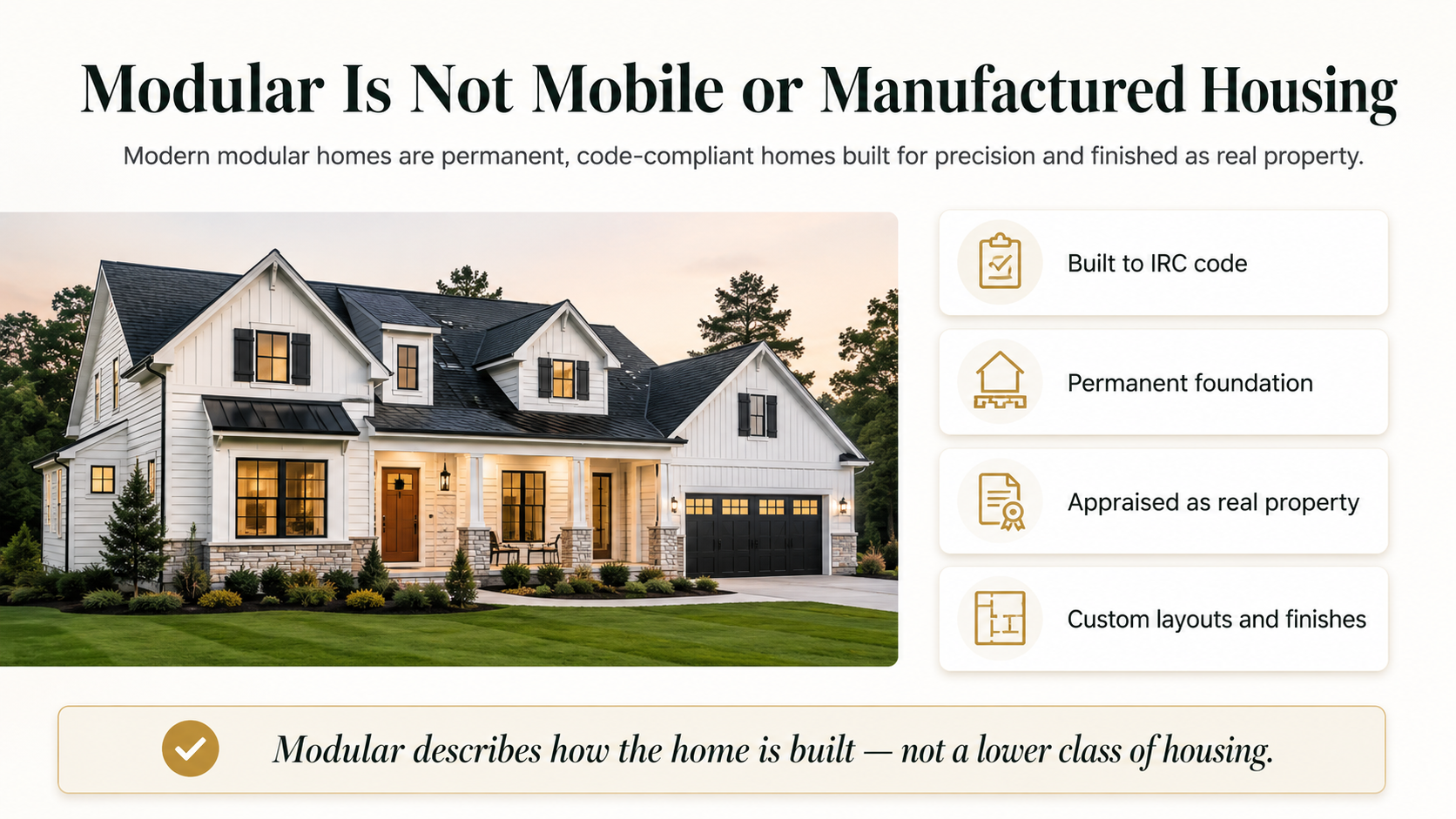
Simple buyer explanation
“Modular describes how the home is built — not a lower class of housing. It is factory-built for precision, delivered in sections, and finished on-site like permanent new construction.”
The modular process has clear steps.
The goal is not to wing it. The goal is to understand the land, design, delivery, set, and final onsite finish before money gets wasted.
Design
Floor plan, layout, budget, engineering, selections, and feasibility.
Factory Build
Modules are built indoors in a controlled production environment.
Transport
Delivery route, access, trees, slopes, utilities, and crane access matter.
Set Day
The modules are lifted by crane, aligned, sealed, and assembled.
Finish
Utilities, siding, roofing, trim, porches, inspections, and final CO.
Note: Set Day is a major milestone, not the finish line. Final onsite finishing still needs to be planned.
The advantage is the overlap.
Traditional construction is mostly sequential. Modular can run the factory build while site prep and foundation work happen at the same time.
- Less exposure to weather delays during the build.
- More predictable planning conversations.
- Earlier path to occupancy when executed correctly.
Site work
Survey, clearing, driveway/access, utility planning, foundation, permits.
Factory build
Modules are constructed indoors while the site is being prepared.
Set + finish
Crane set, connections, final finish work, inspections, and occupancy.
Different people need modular for different reasons.
PRV helps sort the goal first, then works backward into the right modular path: personal home, land/home package, ADU, or small investment build.
Build instead of waiting.
For people tired of resale inventory and open to building the right home in the right location.
- Primary home
- Land + home package
- New construction alternative
Find out what your lot can support.
For people who already own land and want a practical first look before spending on plans or quotes.
- Buildability check
- Access and utility review
- Home or ADU possibilities
Add flexible space.
For homeowners exploring family housing, rental potential, guest space, or long-term property flexibility.
- Detached ADU concept
- Family-use housing
- Rental or value-add strategy
Explore repeatable builds.
For people looking at duplexes, small multifamily, infill lots, or build-to-rent opportunities.
- Duplex / small multifamily
- Repeatable modular plans
- Small infill development
Not sure which category fits?
Start with the property, budget, timeline, and goal. PRV can help identify whether the first step is land search, site feasibility, ADU review, or modular design direction.
Before buying land, check the modular red flags.
Cheap land can become expensive fast. The first review should focus on the site, not just the house model.
Access, utilities, clearing, zoning, setbacks, drainage, and delivery logistics can all affect whether a modular project makes sense.
First-pass feasibility scan
Review
Zoning + allowed use
Can the property support the intended home, ADU, duplex, or investment use?
Setbacks + lot size
Does the lot have enough usable build area after local rules are applied?
Access + delivery path
Road width, turns, overhead lines, trees, and driveway access all matter.
Utilities
Water, sewer, well, septic, power, gas, and extension costs need to be reviewed.
Site conditions
Floodplain, wetlands, slope, drainage, soil, and clearing can change the budget.
Exit strategy
Comparable values, rent potential, resale demand, and total project cost matter.
Common red flags
- Landlocked or poor access
- No clear utility path
- Heavy clearing or difficult terrain
- Wetlands or floodplain concerns
- Unclear zoning or use restrictions
- Comps do not support the build
Check your modular build options.
Send the basics. I’ll review your goal and help identify the next logical step: land search, lot feasibility, ADU review, budget conversation, or Impresa design path.
- For buyers looking for land + home options.
- For landowners who want to know if their lot works.
- For homeowners considering an ADU.
- For investors considering duplexes, small multifamily, or build-to-rent.
What I’ll look at first
This is not about picking a pretty floor plan first. It starts with whether the property, budget, timeline, and goal make sense.
Modular questions people are already asking.
Before you spend money on land, plans, or quotes, these are the basic modular questions worth clearing up first.
Is modular the same as manufactured housing?
No. Modular homes are built to residential building code and placed on a permanent foundation. Manufactured homes follow a different HUD-code path. This distinction matters for financing, appraisal, value, and buyer confidence.
Can modular homes be customized?
Yes. Floor plans, finishes, kitchens, bathrooms, exterior style, porches, garages, and energy features can often be customized depending on the model, factory, budget, and project scope.
Do modular homes appraise like site-built homes?
When properly classified as real property, modular homes are generally evaluated like other permanent homes using relevant comparable sales. The lender, appraiser, property type, location, and documentation still matter.
Is Set Day the move-in date?
No. Set Day is when the modules are placed and assembled on the foundation. Final onsite finishing, utility connections, inspections, porches, garages, trim, and certificate of occupancy still need to be completed.
Do I need land before starting?
No, but the land drives the strategy. If you already own land, the first step is checking feasibility. If you do not own land yet, the first step is identifying the right lot criteria before you buy.
Can modular work for ADUs?
Possibly. ADUs depend heavily on local zoning, lot size, setbacks, utilities, parking, access, and municipal rules. The first step is not picking a model — it is checking whether the property can support the use.
Can modular work for duplexes or build-to-rent?
Yes, modular can be a strong fit for repeatable plans, duplexes, small multifamily, ADUs, and build-to-rent strategy. The numbers still need to work: land cost, site work, utilities, financing, rent/resale value, and exit strategy.
What should I check before buying a vacant lot?
Start with zoning, setbacks, access, delivery path, utilities, well/septic or sewer, floodplain, wetlands, slope, clearing, soil, and comparable values. Cheap land can get expensive fast if the site does not work.
Still unsure where to start?
Send the property address, city, and what you want to build. I’ll help identify the first issue to check before you waste money on the wrong path.
Have land, need land, or just want to know what’s possible?
Submit your modular build review and I’ll help you figure out the cleanest next step before you waste time or money on the wrong lot, wrong plan, or wrong process.
Thinking about an ADU, in-law suite, or backyard cottage?
PRV also has a Northwest Indiana ADU feasibility guide covering Lake, Porter, and LaPorte County considerations, including zoning, setbacks, utilities, septic/sewer, and modular small home options.
View ADU Feasibility Guide